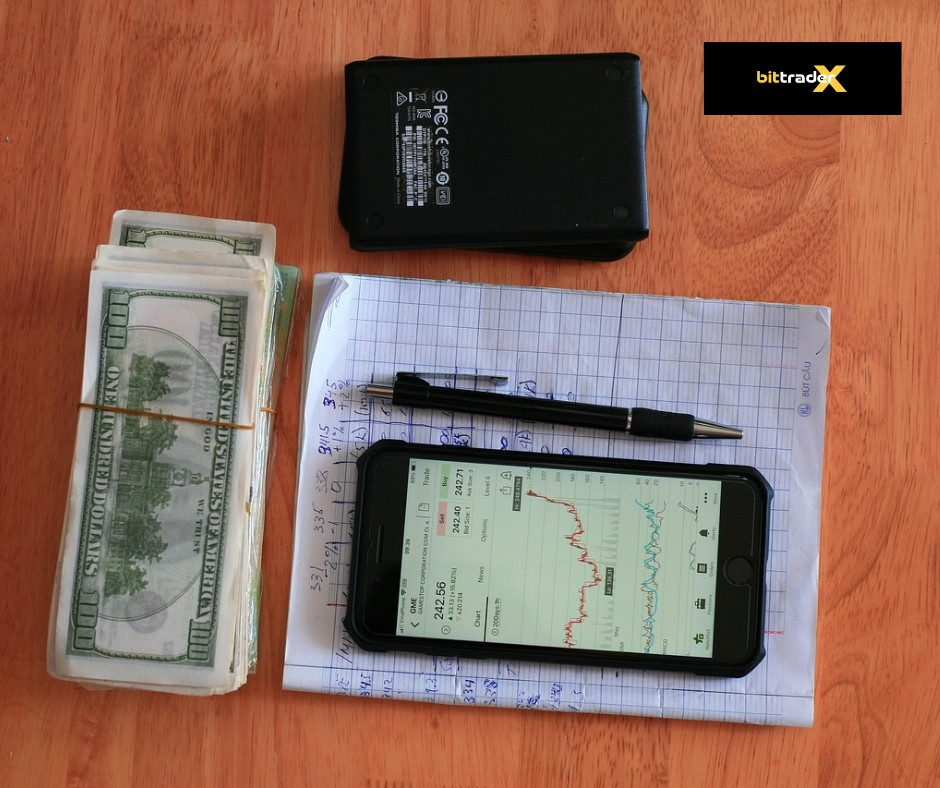
Leverage is one of the defining features of CFD trading and one of the main reasons many traders are attracted to this market. The ability to control a larger market position with a relatively small amount of capital creates opportunities that might otherwise be inaccessible. With leverage, traders can gain exposure to significant market movements without committing the full value of the underlying asset. However, while leverage has the potential to amplify returns, it also increases risk. The same mechanism that can magnify profits can magnify losses just as quickly. For this reason, leverage is often described as a double-edged sword.
What Is Leverage and How Does It Allow Traders to Control Larger Positions With Less Capital?
Leverage allows traders to gain exposure to a position that is larger than the amount of capital they have committed to the trade. Instead of paying the full value of a position, traders deposit a fraction of that value as margin while the remaining exposure is effectively provided through the leverage mechanism.
This concept can be easier to understand when viewed as an increase in market exposure rather than a loan. A trader with a relatively small account can participate in market movements that would normally require substantially more capital. This increased exposure is one of the primary attractions of CFD trading.
The reason leverage exists is that many financial markets often move by relatively small percentages during normal trading conditions. Without leverage, the impact of these movements on a small account may be limited. Leverage allows traders to participate more actively by increasing the size of their exposure relative to their deposited capital.
As a result, even modest price movements can have a meaningful impact on account performance. This characteristic is particularly attractive to active traders who seek opportunities across short-term market fluctuations.
However, leverage does not change the market itself. It does not improve analysis, increase the probability of success, or guarantee better outcomes. It simply increases exposure to market movements. Whether those movements are favorable or unfavorable depends entirely on market direction and trading decisions.
Because leverage allows traders to control larger positions, it is closely linked to margin requirements. The amount of available capital, the size of open positions, and overall account exposure all influence how leverage affects risk.
For users of a trading platform, leverage can create flexibility and capital efficiency. However, it should always be viewed within the context of overall risk management rather than solely as a means of pursuing larger profits.
This principle applies across numerous asset classes. Traders using a cryptocurrency trading platform, participating in Forex markets, or trading commodities all encounter similar dynamics when leverage is introduced. The mechanism remains the same regardless of the asset being traded.
Providers such as bittraderx make leveraged trading accessible across multiple markets, giving traders the opportunity to participate with greater exposure while also emphasizing the importance of responsible risk management.
Why Does Leverage Amplify Every Market Move — Including Unfavorable Ones?
The feature that makes leverage attractive is also what makes it dangerous. Because leverage increases market exposure, every price movement affects the account more significantly than it would without leverage.
Many new traders focus primarily on the possibility of amplified profits. While this outcome is certainly possible, leverage itself is neutral. It amplifies all market movements regardless of direction. If the market moves in favor of the trader, gains increase relative to the capital committed. If the market moves against the trader, losses increase by the same principle.
This relationship is important because financial markets are inherently uncertain. No trading strategy, indicator, or analytical method can guarantee success on every trade. Even highly experienced traders encounter losing positions. When leverage is involved, those losses can accumulate much more quickly.
Small price fluctuations that would normally have a limited effect on an account can become significant when exposure is increased. This is particularly relevant during periods of elevated volatility, when markets may experience larger-than-normal price swings.
Volatility can arise from numerous sources, including economic announcements, central bank decisions, earnings reports, geopolitical developments, and unexpected market events. During these periods, leveraged positions may experience rapid changes in value.
One common mistake among beginners is assuming that because a position can be opened, it should be opened at maximum size. The availability of leverage sometimes creates a false sense of opportunity, encouraging traders to take larger positions than their account can comfortably support.
Emotional trading often worsens the situation. Traders may increase leverage after a series of successful trades because confidence rises, or after losses because they hope to recover quickly. In both cases, exposure increases while risk management deteriorates.
This is why leverage is often responsible for some of the largest account drawdowns experienced by inexperienced traders. The problem is rarely leverage itself but rather the way leverage is used.
Individuals familiar with a traditional crypto exchange may recognize similar patterns. Leveraged cryptocurrency trading can produce impressive gains during favorable market conditions, but it can also generate substantial losses when volatility increases unexpectedly.
Educational resources available through bittraderx help traders understand that leverage should be viewed as a tool requiring discipline rather than a shortcut to larger profits. Properly managed leverage can support trading objectives, while poorly managed leverage can quickly become a source of significant risk.
How to Reduce Leverage Risk Through Margin Management, Stop Losses, and Position Sizing
Although leverage introduces additional risk, it does not have to be dangerous when used responsibly. Effective risk management practices can significantly reduce the likelihood of excessive losses while allowing traders to benefit from increased market exposure.
One of the most important considerations is margin management. Margin represents the capital required to maintain open positions, and monitoring available margin helps traders avoid situations where account exposure becomes excessive. Maintaining adequate margin provides flexibility during periods of market volatility and reduces the likelihood of margin calls or forced position closures.
Stop Loss orders are another essential tool. A Stop Loss defines the maximum acceptable loss before a trade is entered. By limiting downside exposure, traders create a structured risk framework that helps prevent individual trades from causing disproportionate damage to the account.
Position sizing is equally important. The safest way to manage leverage is often through controlling position size rather than attempting to maximize exposure. Many experienced traders use only a fraction of the leverage available to them because they prioritize consistency and capital preservation over short-term gains.
Volatility should also influence leverage decisions. During periods of elevated uncertainty, reducing exposure may be more prudent than maintaining normal position sizes. Market conditions are not static, and risk management strategies should adapt accordingly.
Diversification can provide additional protection. Rather than concentrating risk in a single position, traders may distribute exposure across different markets or asset classes. While diversification does not eliminate risk entirely, it can reduce dependence on any single market outcome.
Another important habit is viewing leverage as optional rather than mandatory. Just because leverage is available does not mean it must be fully utilized. Many successful traders deliberately use conservative leverage levels because they recognize that preserving capital is a prerequisite for long-term success.
Platforms such as bittraderx provide tools that help traders monitor margin usage, manage exposure, and implement risk controls more effectively. By combining leverage with disciplined position sizing and risk management, traders can participate in market opportunities while maintaining greater control over potential losses.
For those using a cryptocurrency trading platform, similar principles apply. Whether trading digital assets, currencies, commodities, or indices, leverage should be approached with caution and integrated into a broader risk management framework rather than viewed as a shortcut to profitability.
Leverage is one of the most powerful tools available in CFD trading because it allows traders to control larger positions with less capital. This increased exposure can create opportunities for greater returns, but it also increases the potential for losses when markets move in an unfavorable direction. The key to using leverage successfully lies in understanding that it amplifies every market movement, not just profitable ones. Small fluctuations can have a much larger impact on account performance when leverage is involved, making risk management more important than ever.
Margin monitoring, Stop Loss orders, disciplined position sizing, and responsible exposure management all play critical roles in controlling leverage risk. Traders who treat leverage as a risk management consideration rather than a profit-enhancement tool are generally better positioned to navigate market uncertainty.
Providers such as bittraderx offer leveraged CFD trading across multiple asset classes while providing tools that help traders manage exposure and monitor account health. Whether trading Forex, commodities, indices, stocks, or cryptocurrencies, bittraderx supports traders in understanding how leverage affects risk and opportunity. Through bittraderx, traders can develop a more balanced approach to market participation, combining the advantages of leverage with the discipline necessary for long-term capital preservation and trading success.