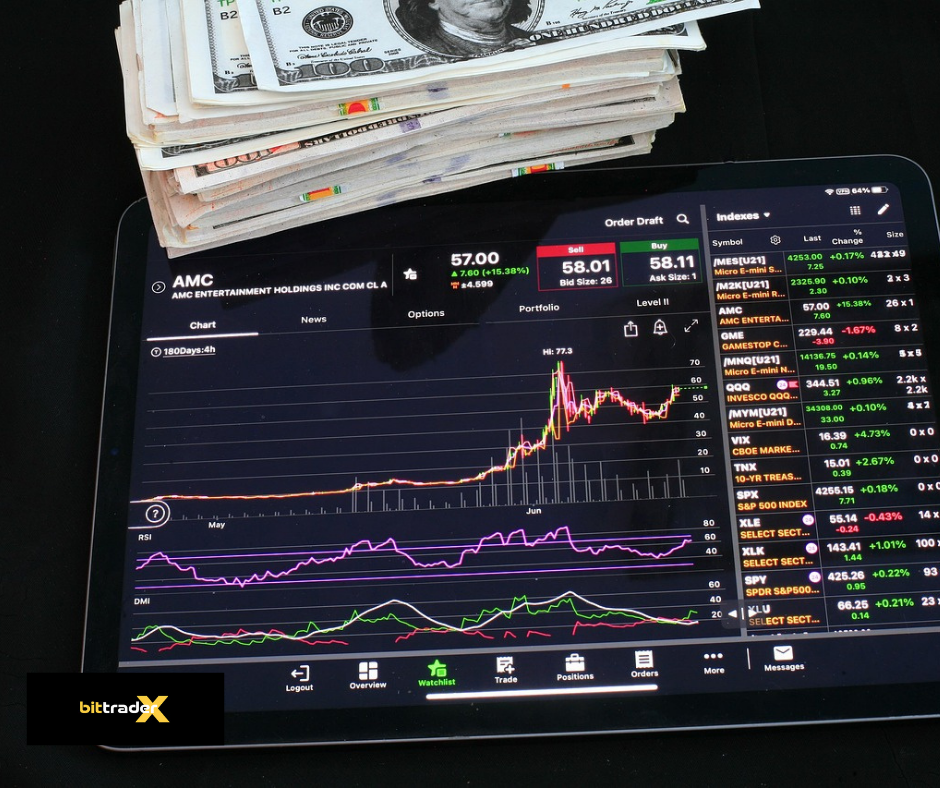
Many traders spend countless hours searching for the perfect strategy, indicator, or market entry point. However, even the most accurate analysis can fail to protect a trading account if position size is not managed properly. One of the most common reasons traders experience significant losses is not necessarily poor market analysis but excessive exposure on individual trades. Position sizing addresses this problem by helping traders determine how large a position should be relative to account size and acceptable risk.
What Is Position Sizing and Why Shouldn't You Open Positions "By Feel"?
Position sizing refers to the process of determining how large a trade should be before entering the market. Rather than deciding position size based on confidence, emotions, or a desire for larger profits, traders use predefined rules to ensure that each trade remains consistent with their overall risk management strategy.
At first glance, this may seem like a simple concept. However, many beginners underestimate its importance. They often focus heavily on whether a trade idea is correct while paying far less attention to how much capital is being exposed. As a result, two traders with identical market analysis can experience dramatically different outcomes depending on how they manage position size.
A common mistake is increasing trade size after a series of successful trades because confidence grows. Another frequent error occurs after losses, when traders attempt to recover quickly by opening larger positions. Both behaviors are driven by emotion rather than discipline and can significantly increase risk.
Position sizing helps eliminate this inconsistency. By establishing rules before entering a trade, traders create a framework that applies regardless of recent results, emotional state, or market excitement.
The concept is closely linked to capital preservation. Financial markets are inherently uncertain, and no strategy produces winning trades all the time. Even highly experienced traders encounter losses. The objective is therefore not to avoid losses completely but to ensure that individual losses remain manageable.
Consistent position sizing also makes performance easier to evaluate. When risk remains relatively stable across trades, traders can assess whether their strategy is effective without results being distorted by random changes in exposure.
Another advantage is psychological stability. Traders who risk too much on individual positions often experience greater emotional pressure because each market movement has a larger impact on account value. Smaller, controlled exposure tends to support more objective decision-making.
For users of a trading platform, position sizing serves as the bridge between market analysis and risk management. Identifying a potential opportunity is only the first step; determining appropriate exposure is what transforms an idea into a sustainable trading decision.
This principle applies across all asset classes. Whether someone trades currencies, commodities, stocks, indices, or uses a cryptocurrency trading platform, position sizing remains one of the most important components of long-term account survival.
Providers such as bittraderx encourage structured risk management practices by offering tools that help traders evaluate exposure and maintain greater consistency across their trading activities.
Risk Per Trade — How to Match Position Size to Capital and Stop Loss?
One of the most widely used approaches to position sizing begins with defining acceptable risk per trade. Rather than deciding how large a position should be first, traders start by determining how much of their capital they are willing to lose if the trade does not work as planned.
This method shifts the focus away from potential profit and toward risk control. Before entering a position, the trader identifies a Stop Loss level and calculates the potential loss if that level is reached. Position size is then adjusted so that the loss remains within predefined limits.
The advantage of this approach is consistency. Instead of exposing random amounts of capital to each trade, traders maintain a more predictable risk profile. This helps protect the account during losing streaks and prevents a small number of unsuccessful trades from causing disproportionate damage.
The relationship between Stop Loss placement and position size is particularly important. A wider Stop Loss generally requires a smaller position to maintain the same risk level, while a tighter Stop Loss may allow a larger position. This dynamic encourages traders to think carefully about both market structure and exposure.
Position sizing therefore becomes closely linked to trade quality. Traders are encouraged to identify logical Stop Loss locations based on market behavior rather than selecting arbitrary levels. Once the risk level is known, position size can be adjusted accordingly.
This approach also promotes patience. Traders who understand risk management often become more selective because they recognize that every position consumes part of their available risk budget. Instead of trading constantly, they focus on opportunities that align with their strategy and risk parameters.
Many traders familiar with a traditional crypto exchange eventually discover that risk management often has a greater influence on long-term results than market prediction alone. Even strong trading ideas can produce poor outcomes if position size is inappropriate.
By integrating position sizing with Stop Loss planning, traders create a more systematic decision-making process. This reduces emotional influence and helps ensure that account growth is driven by consistency rather than isolated successes or failures.
Platforms such as bittraderx provide tools that help traders calculate exposure and manage risk before positions are opened, supporting a more disciplined approach to market participation.
Leverage, Volatility, and Margin — What Influences Safe Position Size?
Position sizing does not exist in isolation. Several additional factors influence how large a position can reasonably be, including leverage, market volatility, and available margin.
Leverage is one of the most significant variables. CFDs allow traders to control positions that are larger than their deposited capital by using leverage. While this increases flexibility, it can also create the illusion that larger positions are safer than they actually are.
A common mistake among beginners is assuming that available leverage should always be fully utilized. In reality, responsible traders often use only a fraction of the maximum exposure available to them. The fact that a position can be opened does not necessarily mean it should be opened.
Volatility is equally important. Markets that experience large price fluctuations typically require more conservative position sizing because price movements can become unpredictable. A position size that feels reasonable in a calm market may become excessive during periods of heightened volatility.
Economic announcements, central bank decisions, earnings reports, geopolitical developments, and unexpected news events can all increase volatility. Traders who account for these conditions often adjust position size accordingly rather than maintaining identical exposure under all circumstances.
Margin requirements also influence position sizing decisions. Every open CFD position requires a certain amount of margin, and excessive exposure can reduce account flexibility. When too much margin is consumed, traders may find themselves vulnerable to margin calls or forced position closures if markets move unfavorably.
Maintaining adequate margin levels provides room for positions to fluctuate without creating unnecessary pressure on account equity. This flexibility becomes particularly important during periods of market uncertainty.
Successful traders therefore consider multiple variables simultaneously. They evaluate account size, risk tolerance, Stop Loss placement, leverage usage, volatility conditions, and margin requirements before determining position size.
This broader perspective helps explain why position sizing is often considered one of the most important aspects of trading. It influences not only individual trades but also overall account stability and long-term performance.
Platforms such as bittraderx provide access to risk management features that help traders monitor leverage, margin, and exposure while making position sizing decisions. These tools support a more structured approach to capital preservation and risk control.
For traders who regularly use a cryptocurrency trading platform, similar principles apply. Regardless of the asset being traded, excessive exposure combined with volatility can create significant risk. Position sizing helps ensure that opportunities remain manageable rather than becoming threats to account survival.
Position sizing is one of the foundations of effective trading because it determines how much capital is exposed to each opportunity. While market analysis focuses on identifying potential trades, position sizing determines whether those trades can be managed sustainably over time. By defining risk before entering a position and adjusting trade size accordingly, traders create a structured framework that supports consistency, capital preservation, and emotional discipline. Rather than relying on intuition or confidence, position sizing introduces objective decision-making into the trading process. Leverage, volatility, margin requirements, and Stop Loss placement all influence appropriate position size. Understanding how these factors interact helps traders avoid excessive exposure and maintain greater control over account risk.
Providers such as bittraderx offer tools that help traders evaluate position size, monitor exposure, and implement disciplined risk management practices. Whether trading currencies, commodities, indices, stocks, or cryptocurrencies, bittraderx supports traders in developing a more structured approach to market participation. Through bittraderx, traders can gain a deeper understanding of risk management while building habits that support long-term consistency, capital protection, and sustainable trading performance.