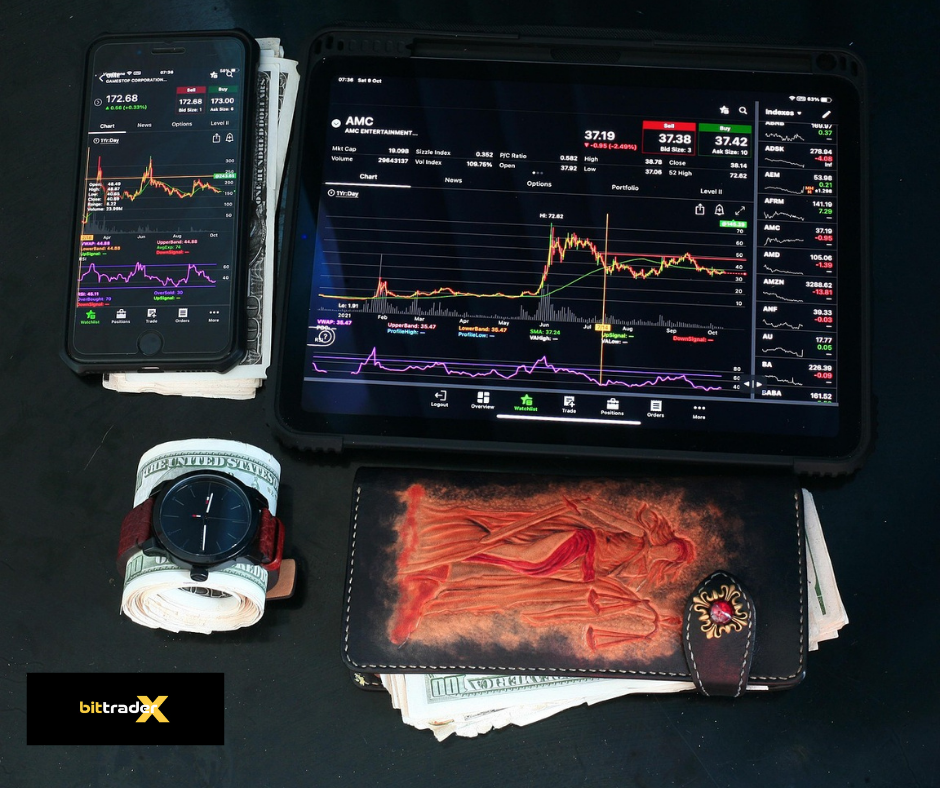
Many traders spend significant time analyzing markets, searching for entry points, and identifying potential opportunities. However, even the most accurate market analysis can be affected by a factor that is often overlooked: execution speed. In CFD trading, success is not determined solely by choosing the right direction or entering at the right moment. What also matters is how quickly a trading order is processed once the trader decides to act. Financial markets move constantly, and prices can change within fractions of a second.
What Is Order Execution and What Happens After You Click Buy or Sell?
Order execution refers to the process that occurs after a trader submits an instruction to buy or sell an asset. While the action itself may appear instantaneous from the trader's perspective, several processes take place behind the scenes before the trade is completed.
When a trader clicks Buy or Sell, the order is transmitted through the trading platform and sent to the broker's infrastructure, where it is processed and matched according to market conditions. The objective is to execute the order at the best available price at that moment.
In calm market environments, this process often occurs so quickly that traders barely notice it. The trade appears almost immediately within the account, creating the impression of an instantaneous transaction. However, financial markets are highly dynamic, and even very small delays can influence the final execution price.
Different types of orders can also affect execution behavior. Market orders are designed to execute as quickly as possible at the best available price. Pending orders, such as Buy Stops, Sell Stops, Buy Limits, and Sell Limits, are triggered only when specific market conditions are met. Regardless of order type, execution quality remains an important consideration.
The complexity of execution becomes more apparent during periods of elevated market activity. When many participants attempt to buy or sell simultaneously, processing speed and market liquidity can significantly influence outcomes.
Execution quality is particularly important for active traders who rely on precise entries and exits. Strategies based on short-term price movements often depend on obtaining prices that closely match planned levels. In these situations, even small differences can affect performance.
For users of a trading platform, understanding execution helps explain why actual trade prices sometimes differ slightly from displayed quotes. The market continues moving while orders are being processed, making perfect synchronization impossible in all circumstances.
This concept is relevant across all financial markets. Whether trading currencies, commodities, indices, stocks, or using a cryptocurrency trading platform, order execution remains a fundamental component of the trading process.
Providers such as bittraderx invest heavily in infrastructure and technology because execution quality directly affects the trader's ability to interact with the market efficiently and consistently.
Why Does Execution Speed Affect Entry and Exit Prices?
The relationship between execution speed and trade pricing becomes easier to understand when considering how quickly modern financial markets move. Prices are not static; they change continuously as buyers and sellers interact.
When a trader identifies an opportunity and submits an order, there is always a small time gap between the decision and the actual execution. If the market remains stable during that interval, the execution price may closely match the displayed quote. If prices change rapidly, however, the final execution may differ from the expected level.
This difference can be particularly important when entering a trade. A trader may plan an entry based on a specific technical setup, support level, resistance zone, or economic event. If execution occurs significantly away from the intended price, the risk-reward characteristics of the trade may change.
The same principle applies when exiting a position. Delays in execution can influence profit-taking or loss-limiting decisions, especially during volatile market conditions. For traders who rely on precise risk management, execution quality becomes a key component of overall strategy performance.
Fast execution is especially valuable for active market participants. Day traders, scalpers, and short-term CFD traders often operate in environments where relatively small price movements matter. In such cases, obtaining an execution price close to the intended level can influence overall results.
However, execution speed is not only important for short-term traders. Longer-term traders also benefit from reliable execution because it improves consistency and helps ensure that trading plans are implemented as intended.
The impact of execution quality becomes more noticeable during major economic announcements, central bank decisions, earnings releases, and unexpected market events. During these periods, price fluctuations can accelerate dramatically, increasing the importance of efficient order processing.
Many traders familiar with a traditional crypto exchange have observed similar effects in cryptocurrency markets. Rapid price changes can create noticeable differences between expected and executed prices, particularly during periods of intense market activity.
Providers such as bittraderx focus on execution performance because accurate and timely order processing supports better alignment between trading decisions and actual market outcomes.
Slippage, Volatility, and Liquidity — When Does Execution Become Especially Important?
While execution quality matters at all times, certain market conditions make it particularly important. Three factors that frequently influence execution outcomes are slippage, volatility, and liquidity.
Slippage occurs when a trade is executed at a different price than expected. This difference may be positive or negative. Positive slippage occurs when execution takes place at a more favorable price than anticipated, while negative slippage occurs when the final price is less favorable.
Slippage is not necessarily a sign of poor execution. It is often a natural consequence of fast-moving markets where prices change between the moment an order is submitted and the moment it is executed. Nevertheless, understanding slippage helps traders set realistic expectations regarding market behavior.
Volatility plays a major role in determining the likelihood of slippage. During calm market conditions, price movements tend to be smaller and execution prices often remain close to displayed quotes. During periods of elevated volatility, prices can change rapidly, increasing the probability of execution differences.
Economic announcements provide a clear example. Inflation reports, employment data, interest rate decisions, and major geopolitical developments can trigger sudden price movements across multiple asset classes. During these moments, execution speed becomes particularly important because market conditions evolve rapidly.
Liquidity is another critical factor. Highly liquid markets generally contain large numbers of buyers and sellers, making it easier to execute orders efficiently. Major Forex pairs, leading stock indices, and heavily traded commodities often benefit from strong liquidity.
Less liquid markets can behave differently. Wider spreads, larger price gaps, and more pronounced slippage may occur because fewer market participants are available to absorb trading activity. This can affect both entry and exit prices.
Understanding the interaction between slippage, volatility, and liquidity helps traders prepare for different market environments. Rather than assuming identical execution conditions at all times, they recognize that market dynamics influence how orders are processed.
Platforms such as bittraderx provide access to markets with varying liquidity and volatility profiles, helping traders gain experience in understanding how execution quality can differ across market conditions. By considering these factors alongside technical and fundamental analysis, traders can make more informed decisions regarding trade timing and risk management.
For traders who use a cryptocurrency trading platform, similar principles apply. Cryptocurrency markets frequently experience periods of elevated volatility and varying liquidity, making execution quality an important consideration there as well. Regardless of the asset being traded, understanding execution dynamics can improve trading discipline and expectation management.
Order execution is a fundamental aspect of trading because it determines how effectively trading decisions are translated into actual market positions. While traders often focus on analysis and strategy development, execution quality influences whether planned entry and exit levels can be achieved in real market conditions.
Fast execution helps traders access prices that are closer to their intended levels, while slower execution may create differences that affect trade outcomes. Factors such as volatility, liquidity, and slippage become especially important during periods of heightened market activity when prices can change rapidly. Understanding how execution works allows traders to develop more realistic expectations and improve overall decision-making. Rather than viewing order placement as a simple button click, they recognize it as part of a broader process influenced by market conditions and trading infrastructure.
Providers such as bittraderx emphasize execution quality because it plays a critical role in helping traders implement strategies effectively across Forex, commodities, indices, stocks, and other CFD markets. Through bittraderx, traders can access markets supported by modern trading technology while developing a deeper understanding of how execution speed, liquidity, and volatility influence trading outcomes. Ultimately, bittraderx provides the tools and infrastructure, but understanding execution dynamics helps traders use those tools more effectively and approach the market with greater confidence and realism.