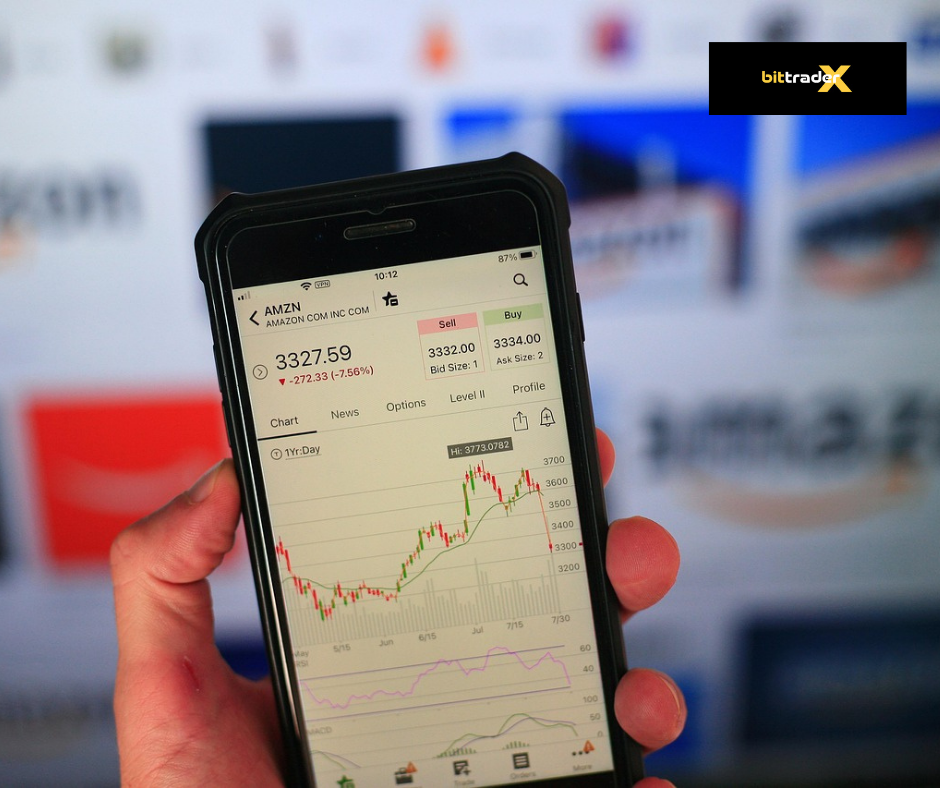
The foreign exchange market, commonly known as Forex, is the largest and most liquid financial market in the world. Every day, trillions of dollars are exchanged as banks, corporations, governments, investors, and traders participate in global currency transactions. Traditionally, currency exchange involves converting one currency into another for commercial, travel, or investment purposes. Forex CFD trading operates differently. Instead of physically buying and holding currencies, traders speculate on changes in exchange rates.
What Is a Currency Pair and How Do You Read Its Price?
To understand Forex CFD trading, it is first necessary to understand how currency pairs work. Unlike stocks or commodities, currencies are always traded in pairs because every transaction involves exchanging one currency for another.
A currency pair consists of two currencies. The first currency is known as the base currency, while the second is called the quote currency. For example, in the EUR/USD pair, the euro is the base currency and the US dollar is the quote currency.
The exchange rate indicates how much of the quote currency is required to purchase one unit of the base currency. If EUR/USD is trading at 1.1000, this means one euro is worth 1.10 US dollars. If the exchange rate rises to 1.1200, the euro has strengthened relative to the dollar. If the rate falls to 1.0800, the euro has weakened against the dollar.
Forex traders constantly analyze these movements because even relatively small changes in exchange rates can create trading opportunities. Currency values are influenced by numerous factors, including interest rates, inflation, economic growth, employment data, geopolitical developments, and market sentiment.
Forex pairs are generally divided into three categories. Major pairs include the world's most heavily traded currencies, such as EUR/USD, GBP/USD, and USD/JPY. Minor pairs consist of major currencies traded against one another without the US dollar. Exotic pairs combine a major currency with a currency from a smaller or emerging economy.
One reason Forex remains attractive is its liquidity. Because currencies are traded globally around the clock during the trading week, major pairs often experience significant trading activity and relatively tight pricing conditions. Traders using a trading platform can monitor these markets in real time and react quickly to changing economic conditions.
The Forex market also attracts traders interested in digital assets. Investors who primarily use a cryptocurrency trading platform often discover similarities between cryptocurrency trading and Forex trading, particularly regarding market analysis and price speculation. However, the factors influencing currency values differ significantly from those affecting cryptocurrencies, making Forex a distinct market with its own characteristics.
Modern providers such as bittraderx offer access to a broad range of currency pairs, allowing traders to participate in one of the world's most active financial markets while utilizing advanced analytical tools and market data.
How Do Long and Short Positions Work in Forex CFDs?
One of the most attractive features of Forex CFD trading is the ability to trade both rising and falling markets. Traditional currency exchange is generally focused on obtaining a foreign currency for practical use or investment purposes. Forex CFDs focus exclusively on price movements.
When a trader expects a currency pair to rise, they open a long position. For example, if a trader believes the euro will strengthen against the US dollar, they may open a long position on EUR/USD. If the exchange rate increases, the value of the CFD position may increase accordingly.
Conversely, if the trader expects the euro to weaken against the dollar, a short position can be opened. In this scenario, a decline in the exchange rate may generate profit opportunities. This ability to speculate on both upward and downward market movements gives Forex CFD traders greater flexibility compared to many traditional investment approaches.
The practical advantage becomes especially clear during periods of economic uncertainty. Central bank announcements, inflation reports, employment figures, and geopolitical events can cause significant currency fluctuations. Rather than waiting for favorable long-term trends, Forex CFD traders can attempt to capitalize on short-term market movements regardless of direction.
This flexibility also allows traders to respond rapidly to changing market conditions. Economic data often produces immediate reactions in currency markets, creating opportunities that may only last for a limited period. Traders who understand market fundamentals and technical analysis can use long and short positions to express their market views efficiently.
Many traders who are familiar with a traditional crypto exchange appreciate this flexibility because similar principles apply when speculating on market direction. The difference lies in the underlying factors driving prices. While cryptocurrencies may respond to adoption trends, technological developments, or regulatory news, Forex markets are heavily influenced by economic indicators and monetary policy decisions.
Through platforms such as bittraderx, traders can access a wide range of currency pairs and manage positions using risk management tools designed to support more disciplined decision-making.
Spread, Leverage, and Volatility — The Most Important Elements of Forex CFD Trading
Understanding spreads, leverage, and volatility is essential before entering the Forex CFD market. These factors directly influence trading costs, risk exposure, and potential profitability.
The spread represents the difference between the buying price and the selling price of a currency pair. It is effectively one of the primary transaction costs associated with Forex trading. Highly liquid currency pairs often have relatively tight spreads, while less frequently traded pairs may have wider spreads.
Leverage is another defining feature of Forex CFDs. It allows traders to control larger market positions with a smaller amount of capital. While leverage can increase potential returns, it also amplifies losses. Even relatively small exchange rate movements can have a significant impact when leverage is involved. For this reason, risk management is critical.
Volatility refers to the degree of price fluctuation within the market. Some currency pairs experience relatively stable price movements, while others can react sharply to economic events and market sentiment. Traders often monitor economic calendars because major announcements can dramatically increase volatility and create both opportunities and risks.
Successful Forex CFD trading requires understanding how these elements interact. A highly volatile market combined with excessive leverage can increase risk substantially. Conversely, disciplined risk management, appropriate position sizing, and careful market analysis can help traders navigate changing market conditions more effectively.
Educational resources provided by bittraderx help traders understand these concepts while gaining practical experience in the Forex market. Whether trading major, minor, or exotic currency pairs, understanding spreads, leverage, and volatility remains fundamental to informed decision-making.
Forex CFD trading allows market participants to speculate on currency movements without physically buying or holding foreign currencies. By trading currency pairs, traders can potentially benefit from changes in exchange rates while maintaining flexibility and access to one of the world's most liquid financial markets. Understanding how currency pairs work, how long and short positions operate, and how spreads, leverage, and volatility influence trading outcomes is essential for anyone entering the Forex market. While Forex CFDs provide numerous opportunities, they also require discipline, education, and effective risk management.
Modern providers such as bittraderx make Forex markets more accessible by offering analytical tools, market data, and access to a wide range of currency pairs. As traders gain experience, they often discover that success depends less on predicting every market movement and more on understanding risk, maintaining consistency, and following a structured trading approach. Through bittraderx, traders can explore Forex opportunities while developing the knowledge and skills necessary to navigate one of the most dynamic markets in global finance. Whether the goal is diversification, active speculation, or gaining exposure to currency markets, bittraderx provides access to the tools and resources that support informed participation in Forex CFD trading.